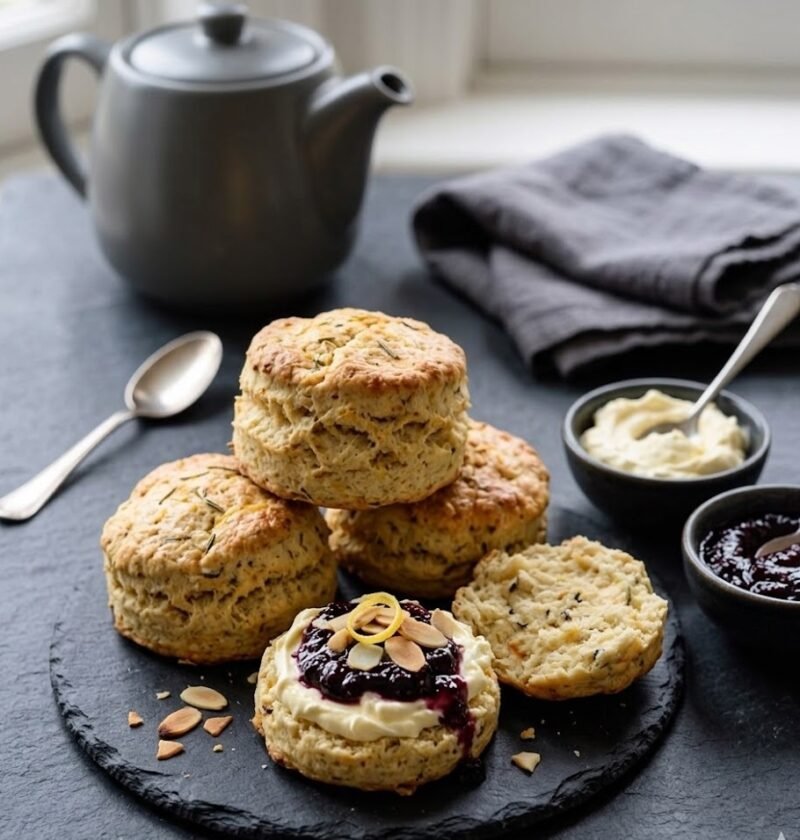
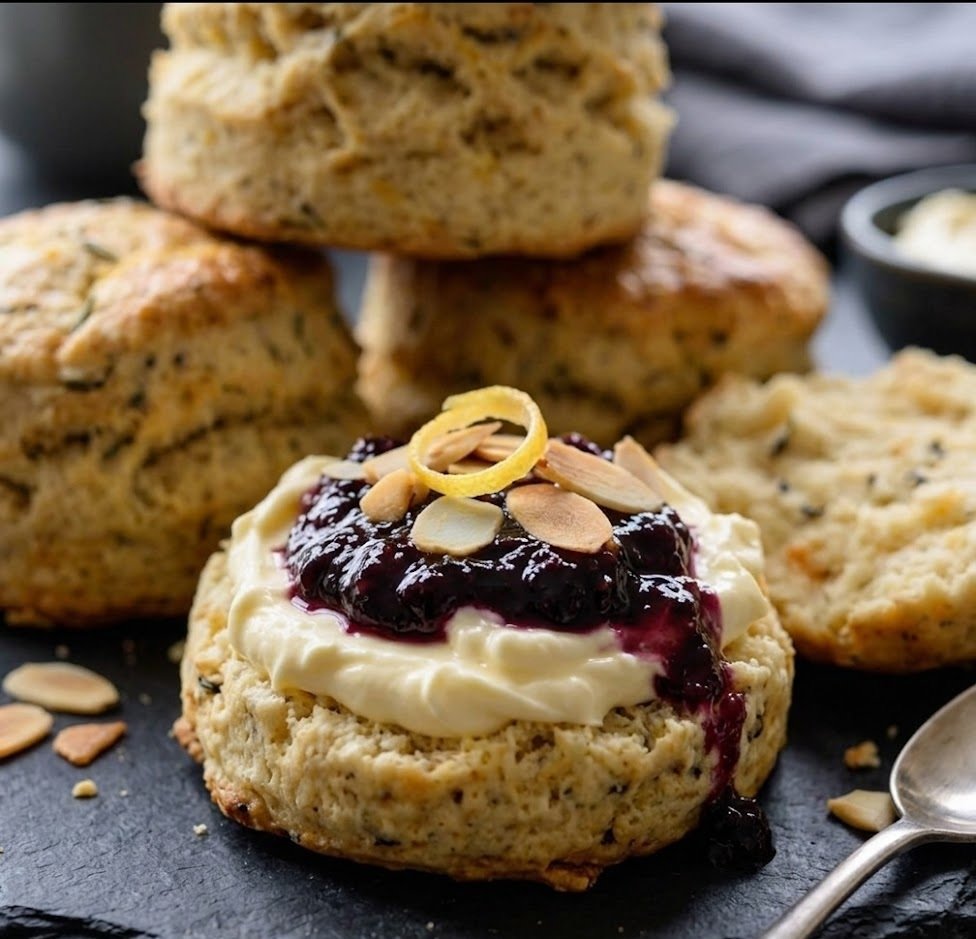
If you love traditional British baking, this Mary Berry Devonshire Scones Recipe is a timeless classic worth making at home. These light and buttery scones have a soft, fluffy centre with beautifully golden tops, making them perfect for afternoon tea or weekend baking. Served warm with clotted cream and strawberry jam, they deliver the rich, comforting flavour that Devonshire scones are famous for. Best of all, this easy recipe comes together quickly with simple pantry ingredients and is suitable for beginners.
Ingredients
For the Scones
- 450g self-raising flour
- 2 tsp baking powder
- 75g cold unsalted butter, cubed
- 50g caster sugar
- 2 large eggs
- 225ml milk, plus extra for brushing
- 1 tsp vanilla extract
- Pinch of salt
For Serving
- Clotted cream
- Strawberry jam
- Icing sugar for dusting (optional)
How to Make Mary Berry Devonshire Scones Recipe
- Prepare the oven: Preheat the oven to 220°C or 200°C fan. Line a large baking tray with baking parchment and place a shelf in the centre of the oven for even baking.
- Mix the dry ingredients: Add the self-raising flour, baking powder, caster sugar, and salt to a large mixing bowl. Stir together until evenly combined.
- Rub in the butter: Add the cold cubed butter and rub it into the flour mixture using your fingertips until the texture resembles fine breadcrumbs.
- Prepare the wet mixture: In a jug, whisk together the eggs, milk, and vanilla extract until smooth.
- Form the dough: Gradually pour the wet mixture into the flour mixture and gently stir with a knife until a soft dough forms. Avoid overmixing as this can make the scones heavy.
- Shape the dough: Turn the dough onto a lightly floured surface and gently knead just enough to bring it together. Pat the dough out to around 2.5cm thick.
- Cut the scones: Use a 6cm round cutter to cut out the scones. Press straight down without twisting for the best rise. Re-roll the leftover dough gently as needed.
- Brush the tops: Place the scones onto the prepared baking tray and brush the tops lightly with milk for a golden finish.
- Bake the scones: Bake for 10–12 minutes until well risen and golden brown on top.
- Cool and serve: Transfer the scones to a wire rack and allow them to cool slightly before serving with clotted cream and strawberry jam.
Tips for the Best Devonshire Scones
Why are my scones not rising properly?
Make sure your baking powder is fresh and avoid twisting the cutter when shaping the scones, as twisting seals the edges and prevents a good rise.
How do I keep scones soft and fluffy?
Handle the dough as little as possible. Overmixing develops gluten and can make the texture dense instead of light.
Should scone dough be sticky?
The dough should be soft and slightly sticky but still manageable. Add a little extra flour only if the dough feels too wet to handle.
Can I make these ahead of time?
Yes, you can prepare the dough ahead and refrigerate it for several hours before baking for fresh homemade scones anytime.
Serving Suggestions
- Serve warm with clotted cream and strawberry jam
- Pair with freshly brewed tea or coffee
- Add fresh berries for a classic afternoon tea spread
- Enjoy with lemon curd for a citrus twist
Storage
Room Temperature
Store the cooled scones in an airtight container for up to 2 days. Warm slightly before serving for the best texture.
Refrigerator
Keep refrigerated in a sealed container for up to 4 days. Reheat gently in the oven before serving.
Freezing
Freeze baked scones in a freezer-safe container for up to 3 months. Defrost at room temperature and warm in the oven for a freshly baked taste.
Nutrition
- Calories: 280 kcal
- Carbohydrates: 35g
- Protein: 6g
- Fat: 12g
- Saturated Fat: 7g
- Sodium: 280mg
Nutrition values are estimates and may vary depending on ingredients used.
FAQs
Can I use plain flour instead of self-raising flour?
Yes, but you will need to add an extra 2 teaspoons of baking powder to help the scones rise properly.
Why are Devonshire scones served with cream and jam?
Traditional Devonshire scones are part of a classic cream tea, typically served with clotted cream and strawberry jam for a rich and indulgent finish.
Can I freeze unbaked scones?
Yes, freeze the cut unbaked scones on a tray until firm, then transfer to a freezer bag. Bake directly from frozen with a few extra minutes added.
What is the secret to light fluffy scones?
Using cold butter, handling the dough gently, and baking at a high temperature all help create light and fluffy scones.
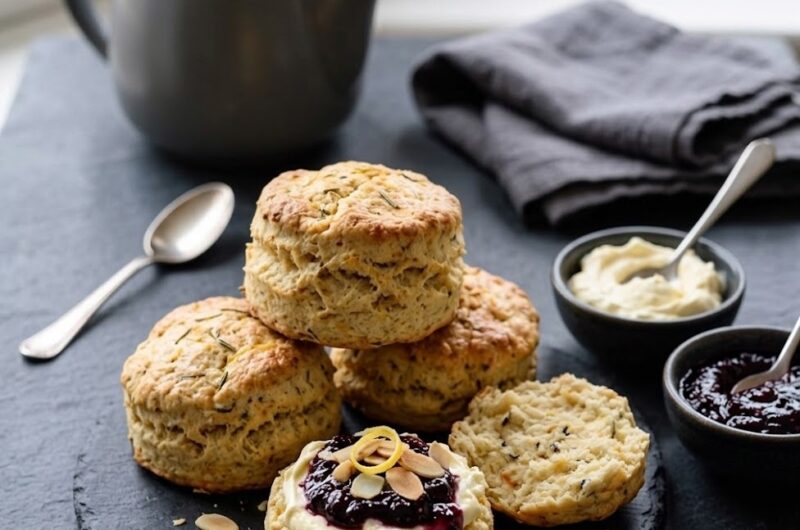
Mary Berry Devonshire Scones Recipe
Course: DessertCuisine: BritishDifficulty: Easy4
servings30
minutes40
minutes300
kcal1
hour10
minutesClassic Mary Berry Devonshire Scones with a light fluffy texture and golden tops, traditionally served with clotted cream and strawberry jam.
Ingredients
450g self-raising flour
2 tsp baking powder
75g cold unsalted butter, cubed
50g caster sugar
2 large eggs
225ml milk, plus extra for brushing
1 tsp vanilla extract
Clotted cream, for serving
Strawberry jam, for serving
Directions
- Preheat oven to 220°C (200°C fan). Line a baking tray with parchment paper.
- Mix self-raising flour, baking powder, sugar, and salt in a large bowl.
- Rub cold butter into the flour mixture until it resembles breadcrumbs.
- Whisk eggs, milk, and vanilla extract together in a jug.
- Gradually mix the wet ingredients into the flour mixture to form a soft dough.
- Turn dough onto a floured surface and gently pat to 2.5cm thickness.
- Cut out scones using a round cutter and place on the baking tray.
- Brush tops with milk and bake for 10–12 minutes until golden and risen.
- Cool slightly on a wire rack and serve warm with clotted cream and strawberry jam.
Notes
- Use cold butter for the lightest texture.
- Avoid overworking the dough to keep the scones fluffy.
- Best served fresh on the day of baking.